
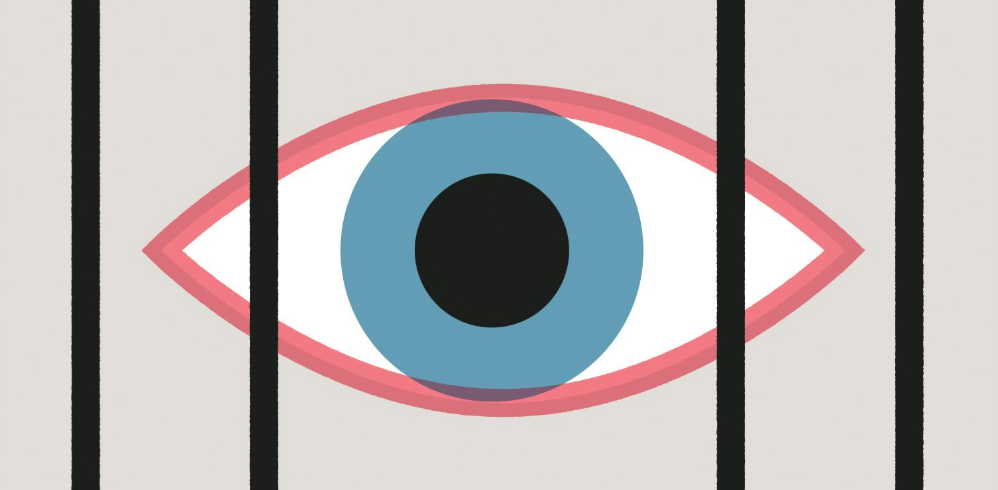
A short reflection on James Scott's classic work, Seeing Like a State (1998), and how it might relate to the AI era
In the mid-1700s, East Prussian demand for timber led to untidy German forests being cut down and replaced with monocultural rows of fast-growing Norway spruce. Provincial magistrates rewrote the law so that gathering fallen wood from the new plantations was treated as theft. A little-known newspaper editor called Karl Marx protested angrily at this "legal lie", but he was ignored. No trespassers could be allowed to interfere with the the new, standardised trees — known as normalbaume.
Unfortunately for the Prussians, their economic bonanza lasted exactly one normalbaum generation. A century later, when the second cohort of spruces was due to be harvested, the loss of understorey, fungi, and other critical biodiversity caused the trees to die where they stood. Yields collapsed by 30%.
In his 1998 book Seeing Like a State, the political scientist and well-travelled anthropologist James Scott used this story to illustrate his central argument: that ignorance is inherent to top-down state control, and that such control tends to be self-undermining because efforts to make the real world more orderly and legible end up destroying the things that kept it functioning. It was Scott's idea of legibility — the simplification of reality to make it easier to exploit — that first drew me to his work, and led me to ask whether it bears any relationship to the kind of world-reading that is regarded as a central feature of AI.
Scott juxtaposes legibility with an ancient Greek terms that he uses to describe practical, local, hands-on knowledge: metis. Metis is what a forest dweller has about their own neighbourhood, what an experienced craftsperson has about their materials, or what a long-time resident has about the rhythms of their street. It is knowledge that cannot be written down, captured in a dashboard, or aggregated into a model. For readers who identify more with mushroom pickers than with magistrates, the legibility/metis distinction at first seems hopeful: it suggests that even the most ambitious controlling project will be checked by the irreducible texture of ordinary life.
The hope doesn't last. Later sections of Scott's book document case after case in which legibility crushes metis — the industrial revolution being one of legibility's greatest wins, with artisans demoted into factory workers, their specialist skills forgotten or bequeathed to machines.
It is this later part of the book that feels most relevant now, as we enter an AI era that Scott, who died in 2024, sadly cannot analyse for us. If we accept that AI is more than automation and more than a passive utility — in other words, that is more like a form of agency — then it can vastly enhance the data-gathering and data-interpreting capacities of any state or state-like actor with sufficient compute.
With AI agents reading sensors in soil, air, tree bark, and human communication networks, there is nothing to stop a state from understanding a forest better than a family that has lived in it for generations. Imagine the film Das Leben der Anderen, except with sixty-three Stasi for every citizen rather than the other way around. Perhaps those AI agents would wield metis as expertly as ordinary people do — and use it to arrange them into neater rows.
The residual optimism in Scott's framework, transposed to AI, is this: a sufficiently authoritarian deployment of AI may itself become a legibility project that yields spectacular returns for one generation and then fails, because it cannot fully capture the human realities used to train it. The most capture-resistant of those realities, in Scott's analysis, was always civil society. He spent years living in Malaysian villages and wrote extensively about civil resistance — the titles of his other books (Weapons of the Weak, The Art of Not Being Governed) tell us plenty about his disposition.
If Scott were here today, he might even argue that individual access to AI — preserved and used to circumvent rather than serve top-down control — could generate a surplus of time and energy that strengthens the civil fabric, rather than erodes it, allowing people to remain just as untidy and illegible as ever.